
OPEN LETTER RE: Ontario Historical Society’s Defamation on Anishinabek Encampment

Dave Mowat — Chair
The Ontario Historical Society34 Parkview AvenueWillowdale (North York), Ontario M2N 3Y2 Canada(416) 226-9011
Board of Governors / Governance Office
Toronto Metropolitan University
350 Victoria Street
Toronto, Ontario M5B 2K3, Canada
Dr. Carl Benn,
Department of History
Toronto Metropolitan University
Friday December 19, 2025
OPEN LETTER RE: Ontario Historical Society’s Defamation on Anishinabek Encampment
Greetings,
My name is John Hawke, Chair of ACTION - Anishinaabek Clans to Invoke our Nation, a registered non-profit established to advocate for our Indigenous rights and to reestablish our inherent forms of governance. I am also a community member of the Chippewas of Lakes Huron and Simcoe and a rights holder to Anishinabek Territories that the Province of Ontario operates in.
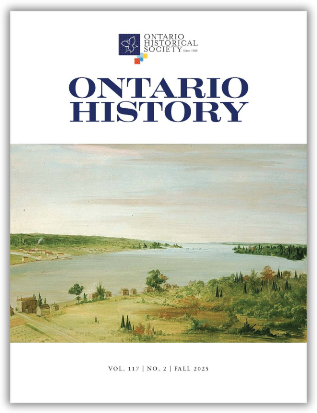
I am writing regarding an article published by the Ontario Historical Society (OHS) titled “The Awenda ‘Council Rock’: Faking Anishinabe–Crown History” which appears in Ontario History, the OHS’s scholarly journal, and authored by Dr. Carl Benn, Professor of History and Chair of the History Department at Toronto Metropolitan University (TMU).
I am one of the individuals that led the encampment at Ontario’s Awenda Provincial Park that lasted from 2012 to 2019 as an ACTION initiative that Benn refers to in his article. In this paper, Benn analyzes engravings on a

large granite boulder in Awenda Park and concludes they are modern fabrications falsely associated with the 1795 Penetanguishene Purchase (Crown Treaty No. 5), an agreement between the Chippewas of Lakes Huron and Simcoe and the Crown. He argues the engravings were unknown prior to 2002 and contain historical errors drawn from nineteenth-century sources, including misidentified military regiments and incorrect lettering styles.
From this analysis, Benn further asserts that our “Indigenous occupation” at Ontario’s Awenda Provincial Park was based on fraud, a characterization of criminality. The Ontario Historical Society in publishing this article has caused damages that harms our reputation that associates us with dishonesty, misinformation, or bad-faith activism within academic, public, and Indigenous governance contexts.
The engravings on the rock — and the rock itself — were never the focus of our encampment. In April 2012, we were removed by police from our teepee at Coldwater’s Canadiana Heritage Museum and needed another place to continue raising awareness about unresolved treaty issues. Elders in our community informed us that Awenda Provincial Park lies within our ancestral lands — lands to which we continue to hold rights. We set up there to exercise those rights and to continue educating the public about flawed agreements and lands belonging to the Chippewa Tri Council. We choose the specific area in Awenda Park that didn’t interfere with the Public's enjoyment and use of the park in the high traffic area.
Our website for ACTION was established in 2010 and since the establishment of our encampment we’ve issued press releases and published content on our Facebook group regarding our initiative in the park. We’ve been covered by local media and where our statements regarding our encampment have always been clear and available where we’ve always stated the camp’s foundation is based on the exercising of our rights and that the park area are misappropriated lands not ceeded in the 1798 Penetanguishene Purchase, Crown Treaty # 5.
Benn further states that those involved occupied the area “under the false impression” that the site held treaty-era significance and that our actions undermine truth and reconciliation efforts, degrade oral traditions, and distract from legitimate historical sources.
SOURCES CITED FOR THE ESTABLISHMENT OF OUR CAMP
Our encampment in Awenda Park was grounded in our oral histories of Beausoleil First Nation, treaty documents, and academic research which can be found cited in our publications www.anishinabek.com that we issued from the start and through the existence of our encampment. Such sources we have always cited as our foundation are:
Community Oral History of Beausoleil First Nation Elders, Albert Blue, Leon King, members of the Assance Family, Merle Assance-Beedie; former Chiefs, Rodney Monague Sr., Leonard Monague.
A History of Christian Island and the Beausoleil Band, prepared by the University of Western Ontario in 1989. In this research Elder’s testimony state that the areas around Thunder Beach, Awenda Provincial Park are traditional hunting grounds of our Band. In regards to the Penetanguishene Purchase this research states, The description of the ceded territory was vague, and the maps accompanying the treaty demonstrated the extent to which the surveyors were unfamiliar with the area. These facts contradict Benn’s statement suggesting the area did not have ties to the Penetanguishene Purchase. If the maps and surveyors at the time are stated as being vague and unfamiliar with the area then Benn’s statement does not take this into consideration.
Exhibit 8-68 in Bear Island Foundation v. The Queen, Supreme Court of Canada 1991; Proceedings of a meeting with the Chippewa Indians of Matchedash and Lake Simcoe at Gwillimbury on the 8th-9th, 1811. Superintendent General to Chief Aisance, “I do not consider that we have a right to take possession of the landuntill the deed of conveyance shall be executed and there is no objection to you occupying the garden grounds at Penetanguishene Bay.”
Indian and Northern Affairs Canada: Public Information Status Report; Specific Claims Branch. Reporting Period: 1970/04/04 - 2007/12/13 stated The Chippewa Tri Council — comprised of Beausoleil First Nation, the Chippewas of Georgina Island, and the Chippewas of Rama First Nation — submitted land claims to Canada in 1986 and 1990 regarding improper land cessions and inadequate compensation related to the 1795 Penetanguishene Purchase (Treaty No. 5), the 1815 Lake Simcoe–Lake Huron Purchase (Treaty No. 16), and the Lake Simcoe–Nottawasaga Purchase (Treaty No. 18). The report discloses that Awenda: Approximately 50,000 acres were not included in Treaty No. 5 and were later absorbed into the 1815 Lake Simcoe–Lake Huron Treaty without consent. These claims were not accepted by Canada’s Specific Claims Branch at the time.
Indian Land Surrenders in Ontario, 1763-1867 by R.J Surtees. The 1815 Lake Simcoe–Lake Huron Purchase (Treaty No. 16) The Treaty document itself references the use of stone boundary markers on the land to define treaty boundaries. The map of this Treaty shows a boundary line, and military road of 250,000 acres from Lake Simcoe to Thunder Beach, Nottawasaga Beach, the area near Awenda where we set up camp.
Research of Dr. Heidi Bohaker, a University of Toronto History Professor and award-winning scholar, that researches Indigenous-Crown relations, treaties, and government policies. Dr. Bohaker co-directs GRASAC (Great Lakes Research Alliance) and serves as Director for the Osgoode Society for Canadian Legal History, known for her digital humanities work and focus on Anishinaabe history and governance through alliances Doodem and Council Fire: Anishinaabe Governance through Alliance Academic Talk: “Belts, Strings, and Paper Wampum: A Legal History of Wampum in Anishinaabe‑Crown Councils.” International Symposium — Around Wampum: Histories and Perspectives, McCord Stewart Museum. Dr. Heidi Bohaker has authored Doodem and Council Fire, a major scholarly study connecting Anishinaabe governance, wampum, and council fire alliances. She has given academic talks on wampum in Indigenous‑Crown council diplomacy, which relate to how councils (fires) and wampum interact diplomatically. Her research relating to Clan Council Fires in our area relates to our Anishinabe Clan Council fires.
Research of Dr. Alan Corbiere, an associate professor in the Department of History at York University and Canada Research Chair in Indigenous History of North America. His research focuses on Indigenous histories, the complexity of treaty negotiations, Anishinaabe language revitalization, and Intertribal Treaties through Wampum belts. Conference papers and seminar discussions. Ojibwe Cultural Foundation’s newsletter, Sept-Oct 2011, Volume 6, Issue 8, “International Relations” Anishinabeg and Haudenasaunee; where the Yellowhead Wampum Belt is talked about and cited from historical proceedings. This Wampum Belt speaks of Penetanguishene Bay Area being Clan Territory of the Beaver, a Clan linked to our last Hereditary Chief, John Assance.
History of the Ojebway Indians by Peter Jones, 1861. The Reverend Peter Jones, was a Mississauga Anishinaabe from the Credit River (now Toronto), recorded the following proceedings of a council between the Anishinaabe and the Haudenosaunee, held Tuesday, 21st January, 1840, in order to renew “the treaty of friendship with the Six Nations of Indians on the Grand River.” The conference was held at the Credit Mission. Jones, who was also a Methodist missionary.. Thirdly, the emblem of a beaver, placed at an island on Penetanguishew [sic] Bay. This sourced cited the Yellowhead Belt aka the Eternal Council Fire Belt that speaks on Clan Council Fires that stretch from Credit River to Sault St Marie.
The 2018 Williams Treaties Settlement Agreement. Article 6.1 and 6.2. An agreement between Canada, Ontario, and seven First Nations that acknowledge the charter protected rights of the Chippewa Tri Council to their traditional territories that fall under lands of Crown Treaties 5, 16, and 18. Lands in which the encampment was set up in at Awenda Park.
ARTICLE MEETS LEGAL THRESHOLD OF DEFAMATION
Accordingly, a prima facie case of defamation is arguably established. Benn’s language in the article implies that we as “Indigenous Protestors” with our encampment knowingly misled the public, acted deceptively rather than mistakenly and where our actions were intentionally fraudulent. The article moves beyond academic disagreement into moral wrongdoing, which courts scrutinize more closely.
The phrase “faking history,” is applied to people rather than objects, is legally significant. This is a mischaracterization of motives where the paper attributes motivations we did not hold, frames our occupation as dependent on the rock’s authenticity when it was not; Ignores and dismisses well-documented treaty, oral history, and legal bases. For these reasons this strengthens an argument of reckless disregard, especially when counter-evidence was readily available. This is not about whether Benn is wrong, but how careless with how living individuals are portrayed.
Would a defamation lawsuit likely succeed? We can clearly show that The Ontario Historical Society through Benn’s article has engaged in personal accusations that include Dishonesty; Reckless or malicious misrepresentation of our encampment; A shift from academic critique to character attack.
The Ontario Historical Society’s, Fall 2025 journal by publishing Benn’s article exposes how academic authority marginalizes Indigenous grassroots voices; Demonstrates that Benn’s framing collapses complex treaty, oral, and legal realities into a narrow evidentiary lens; The impugned statements damages the reputation of Anishinabek Rights holders in the eyes of a reasonable person by reasonable implication; where statements were published to at least one third party.
This controversy also reflects a broader pattern of Indigenous grassroots voices being marginalized within academic discourse. At (Un)Making of Métis Claims in Ontario, an academic and community forum hosted by the Robinson Huron Treaty First Nations in Sault Ste. Marie on Dec 13-14, 2025 an issue at this forum in relation to skewed academic research was raised. The forum discussed how the Metis Nation of Ontario gifted almost $700,000 to York University to establish a new doctoral fellowship in Metis Studies to enhance the communities they serve. The concern was this can play a role in influencing research to back the MNO's unsubstantial claims of having rights to our Anishinabek territories. Academia research is not exempt from political influence to sway historical facts as obviously seen in Benn’s article.
Dr. Carl Benn is also Chair of the History Department at Toronto Metropolitan University. In 2022, Ryerson University was renamed Toronto Metropolitan University to distance itself from its namesake, Egerton Ryerson, who was a key architect of Canada's harmful Indian Residential School system, a legacy that caused deep pain for Indigenous communities and prompted long-standing calls for change. Despite the name change it appears Toronto Metropolitan University is continuing in the harm to Indigenous communities as amplifying such attacks being made by Benn’s article.
We demand a public apology and retraction of statements in the article in relations to our encampment and to be published by the Ontario Historical Society immediately or face the potential litigation of such defamatory publication.
We look forward to a response at your earliest convenience,
In the Spirit of Canada’s Truth and Reconciliation mandate,
John Hawke


Comments